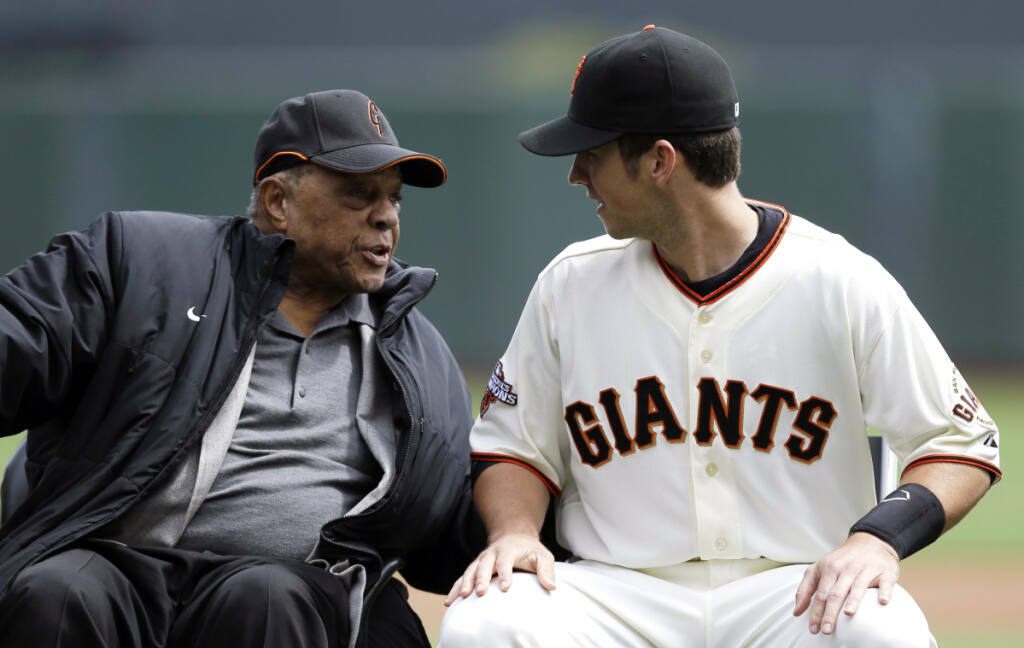
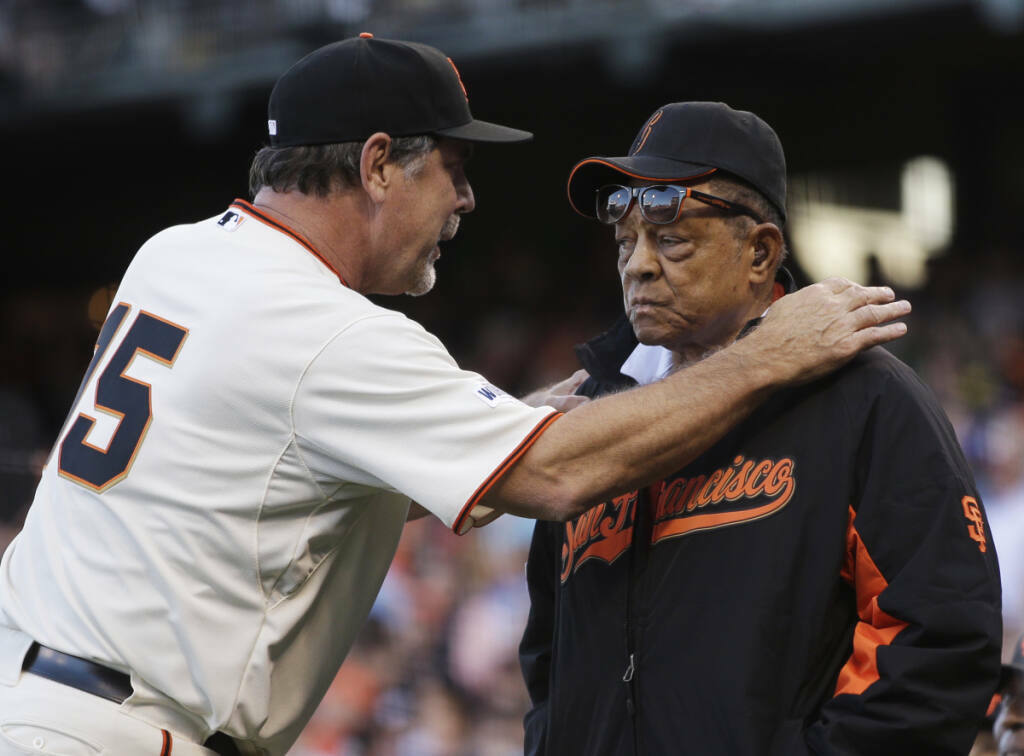
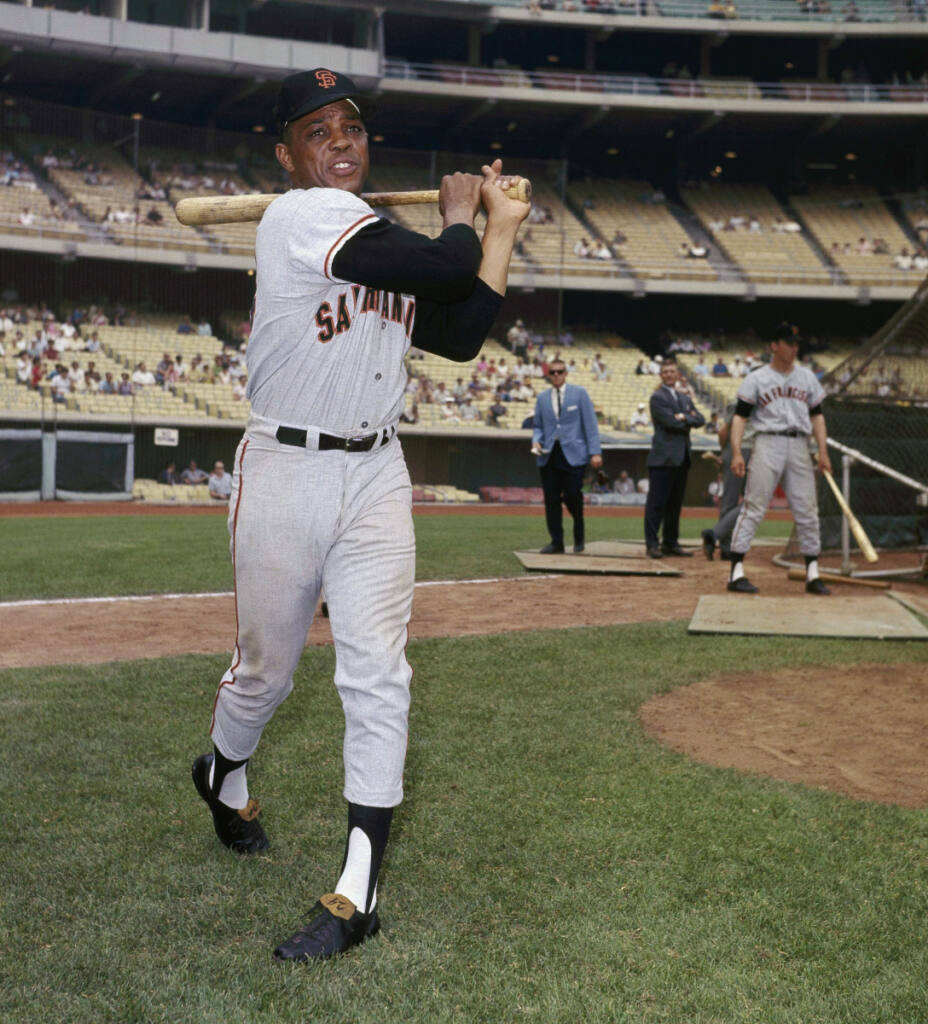
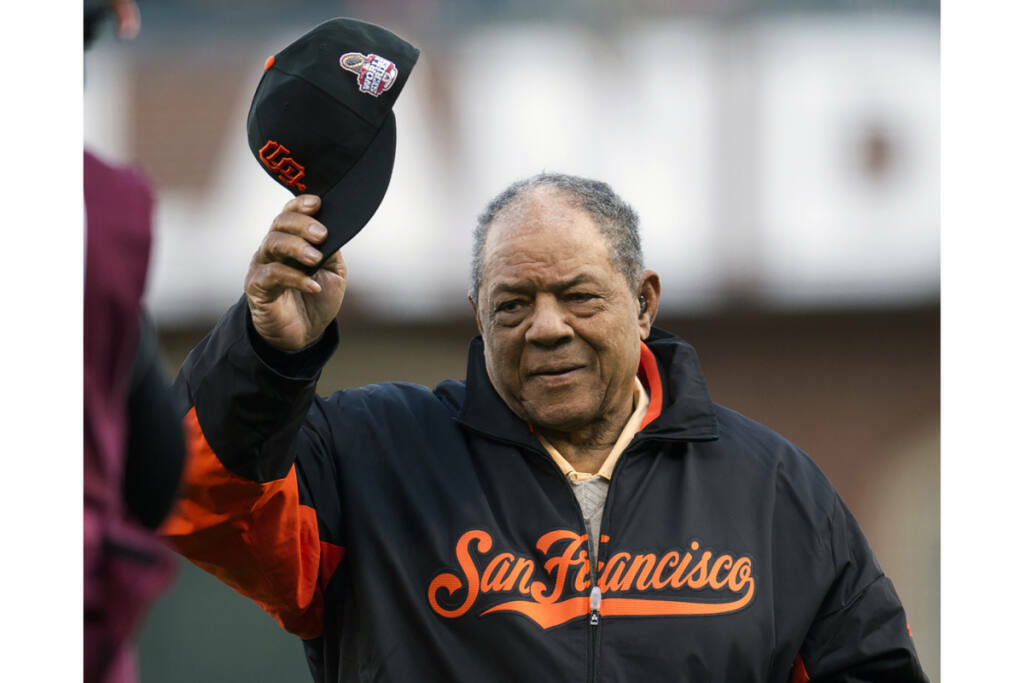
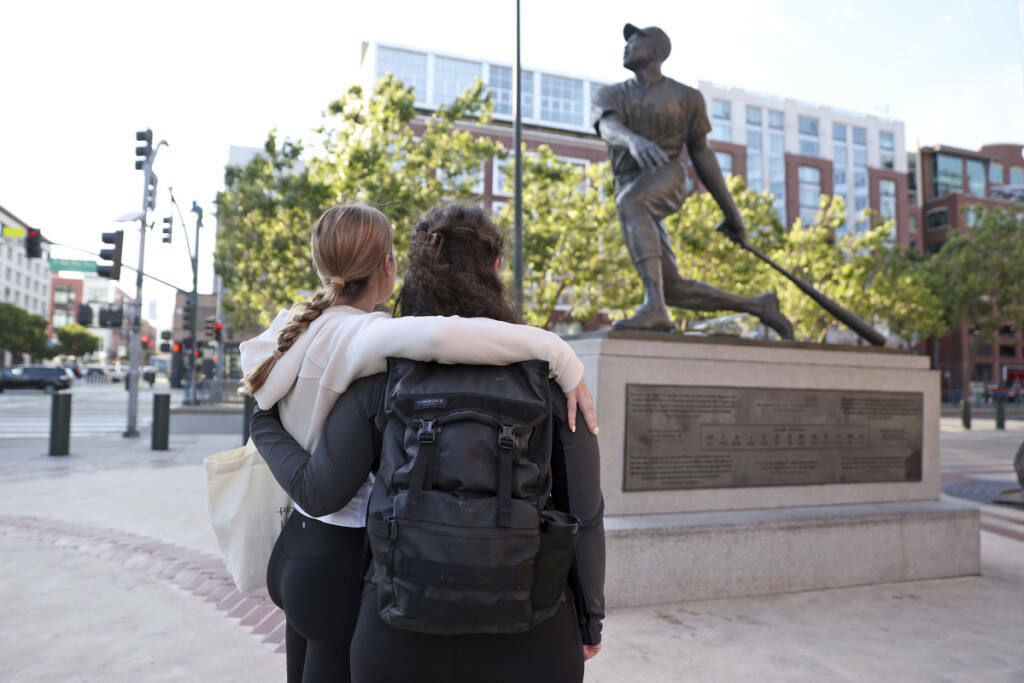
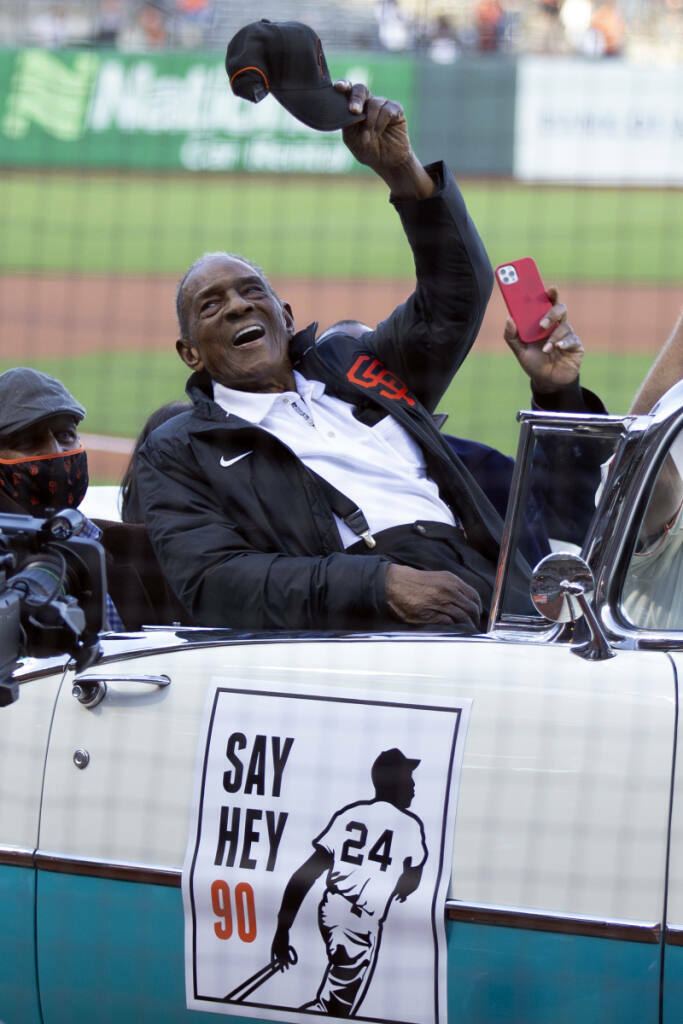


Willie Mays ran into our lives in 1951 and never stopped running through our lives.
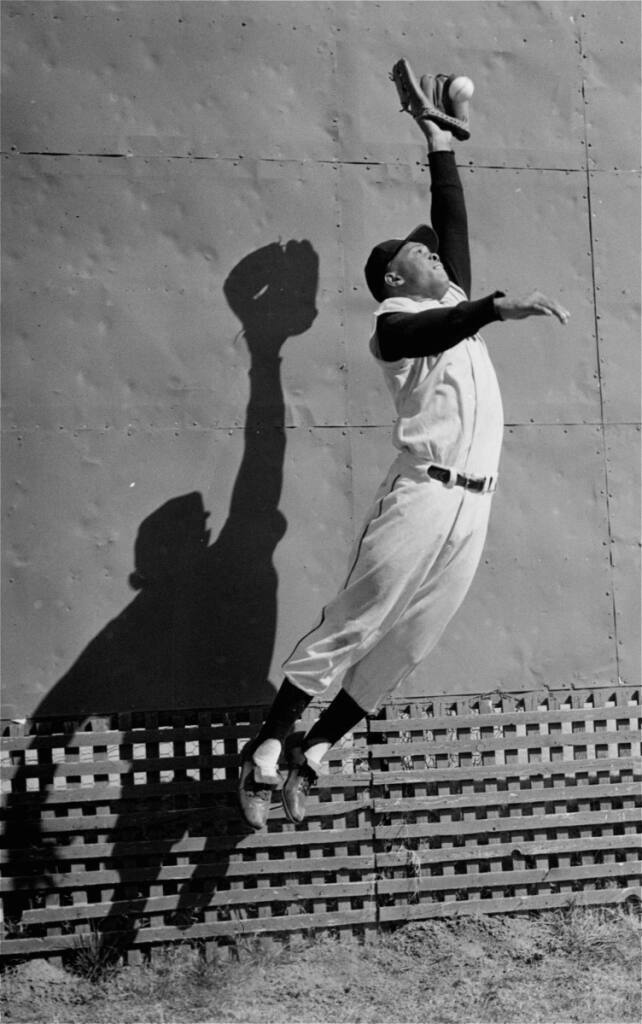
The man who died Tuesday at 93 is regarded by nearly all who saw him play and many who did not as the greatest baseball player ever. We see him now — forever — running after fly balls, his glove outstretched, his cap flying off his head from sheer effort, from the sheer glee of playing ball. He ran after balls and he ran the bases.
And he runs.
He was National League Rookie of the Year in 1951. Twice, he won the Most Valuable Player Award. He won one batting title, he won 12 Gold Gloves as the best outfielder in the league, and he played in 24 All-Star Games, 24 the number on his jersey, his iconic, magic number. Willie Mays, the Say Hey Kid, No. 24. And he hit 660 home runs, an incredible number before players were juiced on performance-enhancing drugs. He is in the Hall of Fame. He played for the Giants in New York and in San Francisco and, at the end of his career, went back to New York with the Mets.
He surely would have hit more home runs, but for years he played in Candlestick Park with winds like tornadoes, winds that drove balls hit to left field back toward the field. The ’Stick was a home run killer and Mays, from self-preservation, developed two separate swings. On the road, he hit to left field. At home, he veered his swing to right field to avoid the wind. If he had played in another ballpark, he probably would have hit more than 70 home runs a season.
What did he mean to America?
Listen to noted baseball historian Marty Lurie, who also does postgame and pregame radio shows for the Giants:
“He means the youth of America and the hope of America after World War II. He brought the spirit, the young man, the Say Hey Kid, the guy with the basket catch. His hat flew off his head. And New York was the center of it. Mickey Mantle was there for the Yankees and Duke Snider for the Dodgers and Mays for the Giants. He did it with a flair. He brought the excitement to baseball that baseball lived off after that.”
And what did Mays mean to baseball?
“Willie Mays is the best baseball player that I’ve ever seen” — this from Orlando Cepeda, Mays’ teammate on the San Francisco Giants. Cepeda, also a Hall of Famer, first met Mays in 1954 when Mays played winter ball in Puerto Rico and Cepeda was the batboy.
“Willie Mays was the best base runner who ever lived,” Cepeda also said. “I played with Hank Aaron. I mean, Hank Aaron is a great, great, great baseball player. Frank Robinson — great, great baseball player. Roberto Clemente — great, great baseball player. But I don’t know what it is, nobody like Willie Mays. Watching Willie Mays play in 1954 made me want to be a baseball player.”
Lurie on the same subject: “He was the best because he could do everything. Let me put it to you this way: Maybe there were others who had more power, others who hit for a higher average — but no one man could do everything he could do. I didn’t see Ty Cobb play and I didn’t see Babe Ruth play or Honus Wagner play, but of every player of my lifetime or anyone I’ve been able to study, Mays was the best ever. I base that on people I’ve interviewed over the years who played with him. I’m talking about a span of interviewing people that played over a period of 60 years. They felt, almost 99%, he was the best they ever saw.”
Born in Alabama
Mays was born in 1931 near Birmingham, Alabama. His dad, Cat Mays, worked as a Pullman porter. As a teenage prodigy, Mays played for the Birmingham Black Barons in the Negro League. (Note: This appreciation is indebted to James S. Hirsch’s fine literary biography of Willie Mays.)
When the Giants signed him to a minor league contract, owner Horace Stoneham sent a telegram agreeing to the deal. Stoneham misspelled Mays’ name — Willie H. Mayes Jr. Stoneham would learn to spell the name right. Everyone would.
In 1951, the New York Giants wanted to bring Mays up from the minors to the big club. He was 20 years old and had spent less than a year in the minors. How did he react to the promotion? He didn’t want it. “What if I don’t make it?” he timidly said to Stoneham. Stoneham said the Giants had a feeling he would make it.
Mays went 1 for 26 at the plate to start his big league career. He broke down and cried at his locker. He wondered if he ever would hit major league pitching.
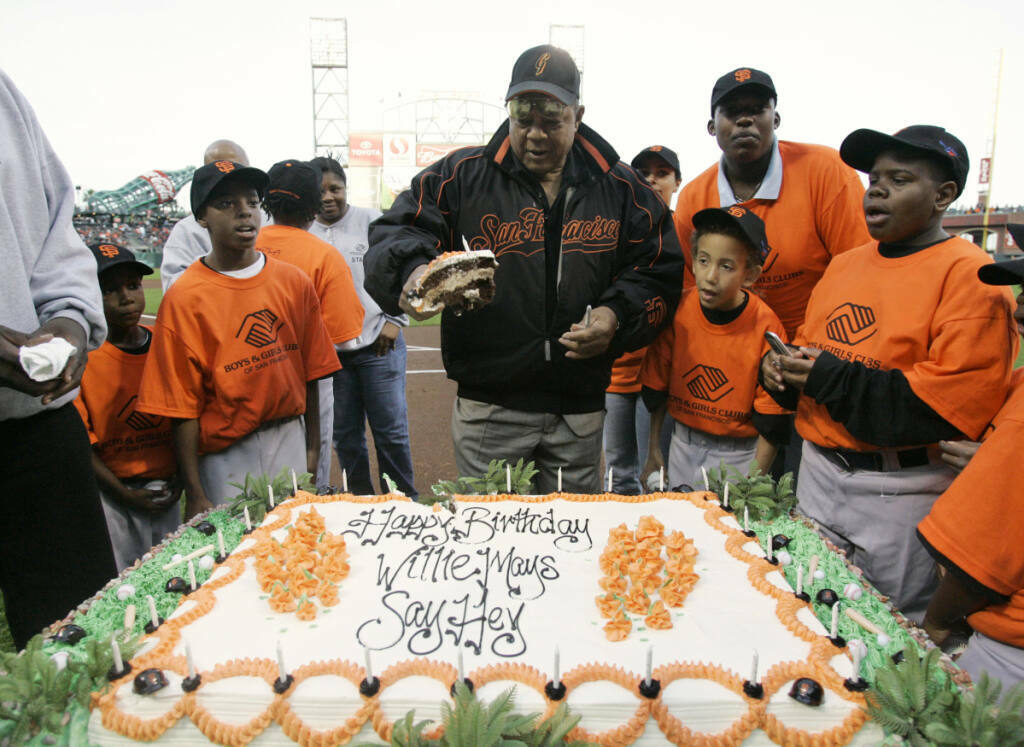
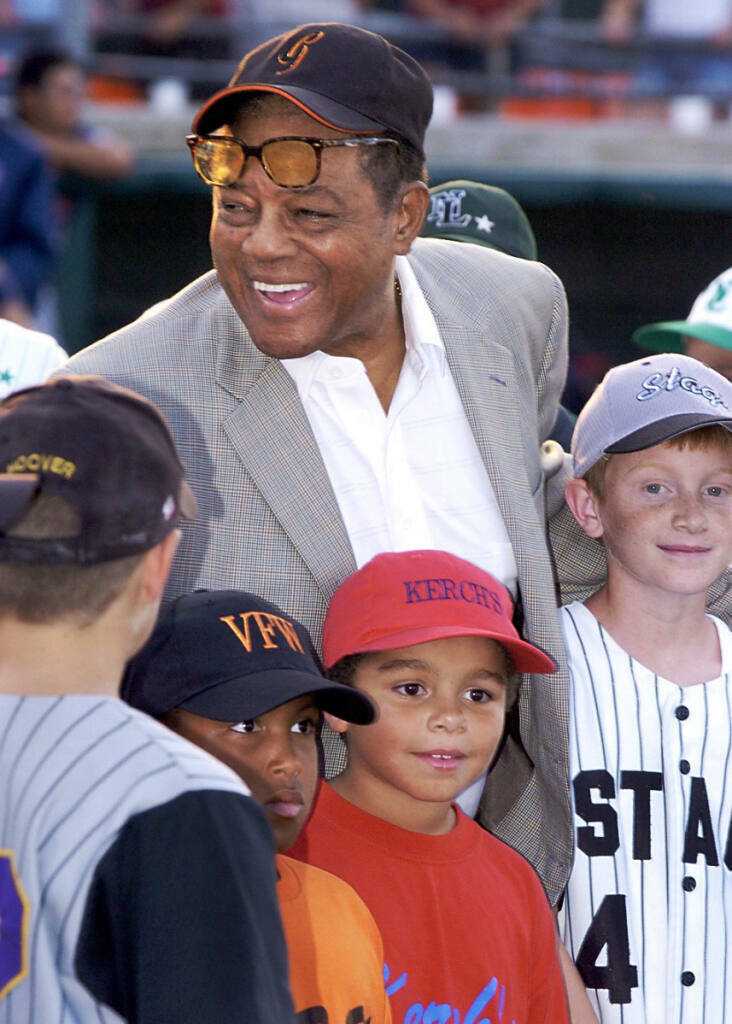
The image of Mays crying seems innocent now. In his career, he made lots of opposing pitchers feel like crying. He was a sensitive man. He always felt more comfortable with children than adults he did not know. He famously played stickball in the streets of Harlem before playing night games at the Polo Grounds.
When he lived in San Francisco in 1961, two kids showed up at his house and asked for a ride to the game. He told them to jump into his Cadillac. But the kids had forgotten their tickets. So Mays drove them to get their tickets. He started to head back to the ’Stick. Then the kids realized they forgot their lunches. So Mays drove them to get their lunches. One mom stood on the stoop amazed. This was Willie Mays chauffeuring her kid. When Mays dropped the kids off at the park, he told them to meet him after the game. He would drive them home. After the game, the two kids had turned into four. Mays drove every one of them home.
Mays could be innocent and childlike. He visited children in hospitals without telling the press. He wanted nothing for himself. He also could be suspicious and private. He knew he was Willie Mays, knew people wanted things from him. He could be difficult with the press.
“It’s hard to describe him because he’s two different people,” said Willie McCovey, Mays’ Hall of Fame teammate on the Giants. “He was a different person around the press because, I don’t know, I think he had this feeling they were out to get him. I don’t know if that’s the right words. Away from the press in that clubhouse around his teammates, there was no better person. He would give you the shirt off his back. He would take you to his house. If you needed something, golf clubs, he had them. He was just great. He treated everybody like that, not just the stars, even the young guys. There was no better teammate than Willie.”
The Catch
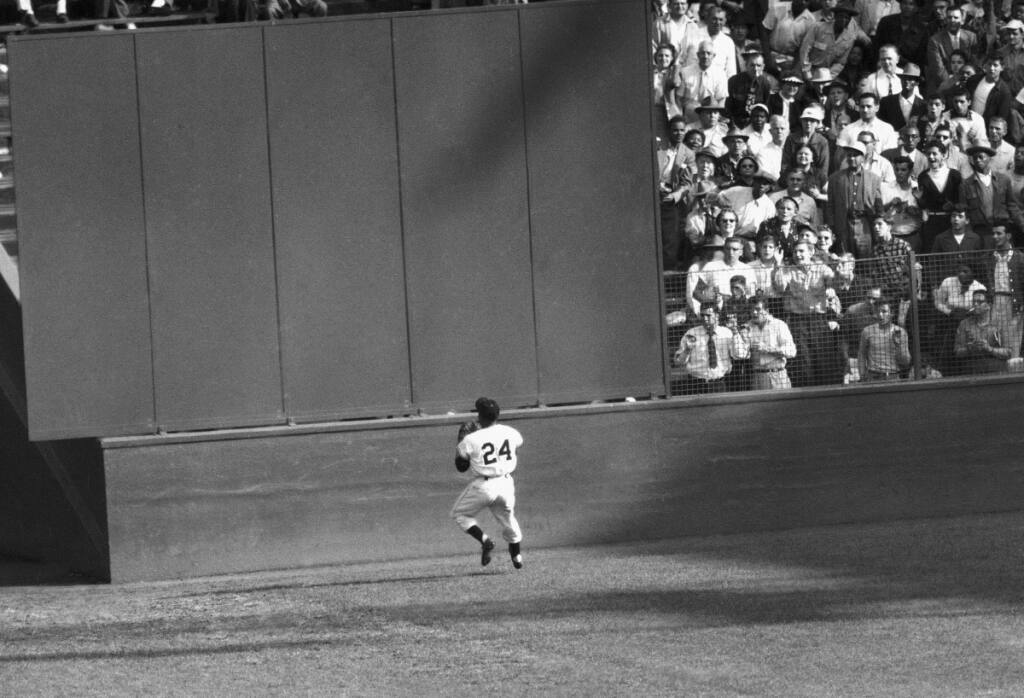
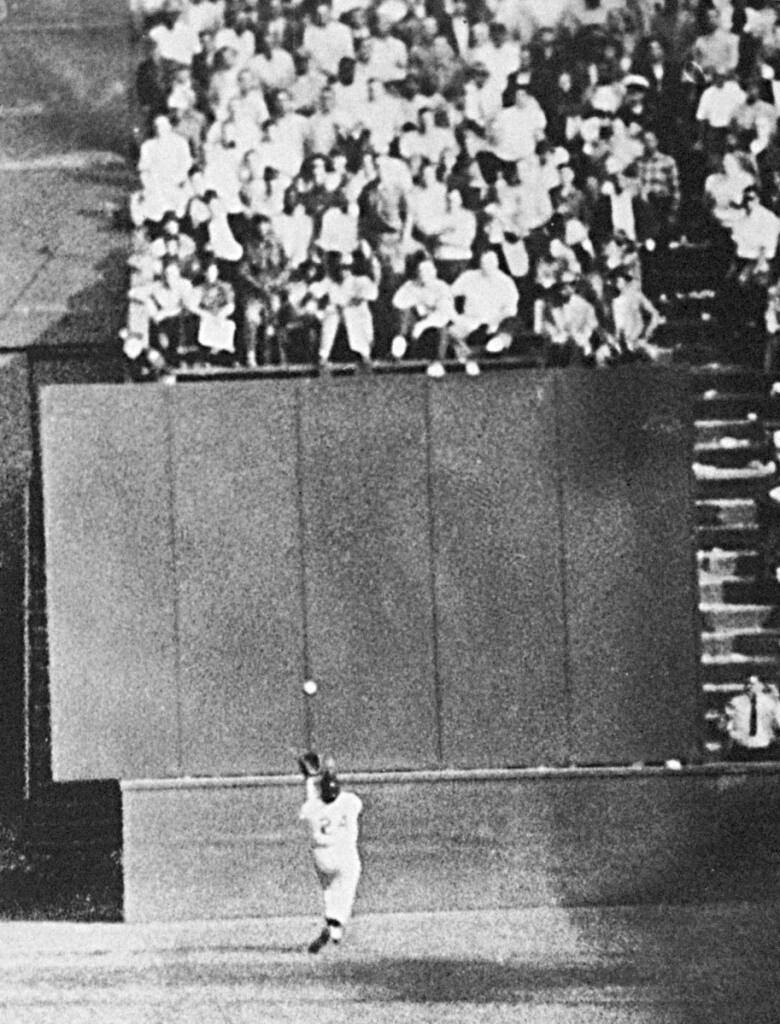
In 1954, Willie Mays made The Catch. His Catch is as famous as Dwight Clark’s Catch. More spectacular. The New York Giants were playing in the World Series against the superlative Cleveland Indians, who had won an unbelievable 111 regular-season games. The Indians had two 20-plus-game winners, one 19-game winner. The Indians had Al Rosen and Larry Doby and Bob Feller. The Indians were loaded.
Game 1, top of the eighth, scored tied 2-2 — Rosen on first, Doby on second, nobody out. Vic Wertz at the plate. Mays played shallow, wanting to cut down Doby at the plate if it came to that. Mays shading toward right field for the left-handed-hitting Wertz. The count went to 1-2. Wertz hit a fastball. Crushed it. The ball took off. Sailed over Mays’ head. Two runs would score for sure. Maybe three if it was an inside-the-park job.
The ball carried deep into the Grand Canyon center field at the Polo Grounds. Mays ran after it. Mays ran. Mays ran with his back to the infield. He ran. He ran out of grass. He looked over his left shoulder. He caught the ball.
Doby tagged up. He could score from second, that’s how far away Mays was. But Mays turned around, his hat flying off his head, and he made the most famous throw in baseball history, threw back toward the infield. He fell down and watched the play from his stomach. Doby had to stop at third and Rosen ran back to first. The Indians never scored again in the game and the Giants won 5-2 in extra innings and went on to sweep the Indians in the Series.
The Catch was the most famous moment of Wertz’s career, and it was an out.
In the 1959 All-Star Game in Pittsburgh, Mays hit the game-winning triple in the eighth, a blast. Bob Stevens, legendary sports writer for the San Francisco Chronicle, rose to the occasion, writing the greatest line anyone ever wrote about Mays: “Harvey Kuenn gave it honest pursuit, but the only center fielder in baseball who could have caught it hit it.”
Go, Willie.
Leading by example
Mays was a powerful presence on the baseball field. He was a force for good.
Take what happened Sunday, Aug. 22, 1965. Giants vs. Dodgers in San Francisco. Serious rivalry. Serious emotion. Sandy Koufax vs. Juan Marichal. High drama.
Marichal at the plate. Dodgers catcher Johnny Roseboro seething. With cause. He believed Marichal was throwing too close to Dodgers hitters. Koufax would not retaliate. Roseboro thought retaliation was against Koufax’s nature. Roseboro settled the issue. Believed he had to.
Koufax threw a low fastball for a ball. Roseboro dropped the pitch, grabbed it and scorched it back to Koufax. He threw the ball near Marichal’s head. On purpose. Marichal said it nicked his ear. Marichal was scared to death. He yelled at Roseboro. Roseboro stood up. Marichal whacked him three times on the head with his bat. Blood ran down Roseboro’s face.
Marichal ran to the dugout. Roseboro chased him. But Mays appeared. He grabbed Roseboro, stopped him. And then Mays did the kindest, gentlest thing.
With chaos loose on the field, with Candlestick the scene of a potential fan riot, Mays led Roseboro to the Dodgers dugout. To the “other” dugout. Blood soiled Roseboro’s chest protector. Mays feared Roseboro had lost an eye — he hadn’t. Blood scarred Mays’ jersey. Mays and Roseboro sat on the bench. Mays pressed towels to Roseboro’s bleeding head. Mays cradled Roseboro’s head in his arms.
And then, sitting in the opposing dugout holding the bloodstained towel in his hands, Willie Mays wept. He wept for the Giants and he wept for the Dodgers. And he wept for baseball. He just wept.
Trade to the Mets
The Giants traded Mays to the Mets in 1972. It was like trading the Golden Gate Bridge. San Francisco Mayor Joseph Alioto expressed the Bay Area’s horror: “There is no joy in Frisco. The mighty Stoneham has struck out.”
Marty Lurie got to know Mays in Mays’ later years. He would drive Mays to speaking engagements, interview Mays onstage. They were friends.
“He was a showman. This is important. When he stepped on the baseball field, he played for the fans. And when we did shows together, he was a showman at 84 years old in front of the audience. He teased me. He would laugh. I would tease him back. He had a great sense of humor. When the light came on — this was the way he’d been his whole life — he performed to the fans.
“I said to him during a show we did in Palm Desert, ‘How do you want to be remembered by everybody?’ And he started crying for the first time ever in all the shows I’d had with him, tears came out of his eyes. I didn’t know what to do. I didn’t have a handkerchief. Someone brought some tissues up. He said, ‘How do I want to be remembered? I played for you.’ And he looked out at the audience. He could hardly see them because of his eyes. ‘I played for you and I want you to know that when I stepped on the field I played for you and the recognition and warmth I get from the fans that’s the way I want to be remembered.’ It was very touching.
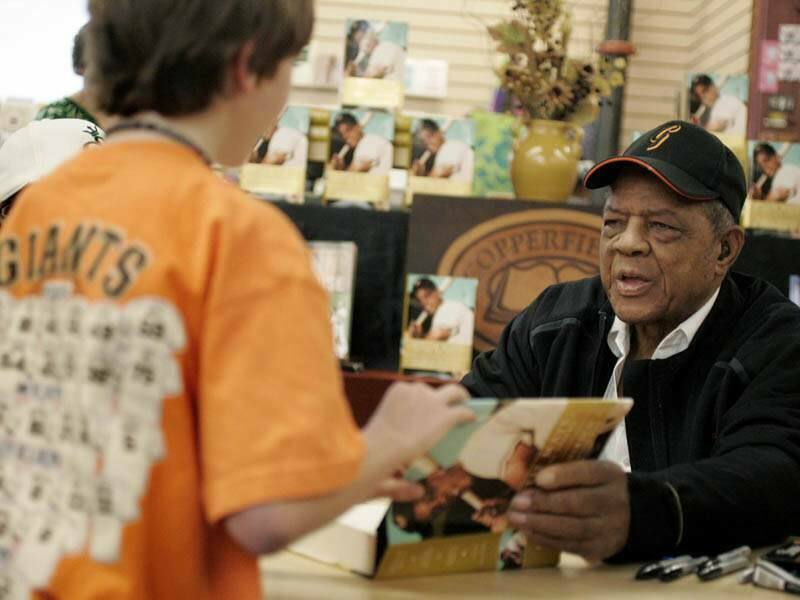
“He would do an autograph session scheduled (for an) hour, and he and I would talk about his career. I’d ask him questions about growing up in Alabama and being a young man traveling on the road with the Negro League players and then getting signed and what it was like. His whole career, the timeline and stories so people could get to know who he is.
“And we’d schedule it for an hour. It ended up being an hour and a half. He loved to talk and I never knew where it was going because he always came up with something unusual. He teased the heck out of me. If I asked a question he didn’t like, he’d say, ‘You’re a lawyer. You should know better than that.’ He’d be teasing me to get a rise out of me and the audience.
“Then I’d say to him, ‘You know you’ve been milking that catch for 60 years already. It was an easy catch. Will you let it go already?’ And he’d laugh and the audience laughed. When I did these shows with him, the audience couldn’t believe he and I were doing this on the stage. To be on the stage with him, me kitzeling him (“tickling him” in Yiddish), and asking questions is probably the biggest moment of my life, the most unpredictable moment of my life, and it will be forever.”
It will be forever. Forever we remember Willie Mays running after Wertz’s long drive. Forever we remember him reaching out and catching the ball in full glorious stride and wheeling around and making that impossible throw. He ran through our childhood and he runs through our middle years and our older years and he runs through baseball and he runs through America past and past. He runs.
Lowell Cohn retired as a columnist from The Press Democrat in 2017.