




If you’ve been to any beach on the Sonoma Coast, you likely have seen ice plant. The invasive species looks like a bunch of tiny succulents and often sprouts purple flowers.
Despite how pretty these flowers might look, ice plant is bad news for native plants in the coastal ecosystem, and a group of volunteers from all over the county is working weekly to manage them.
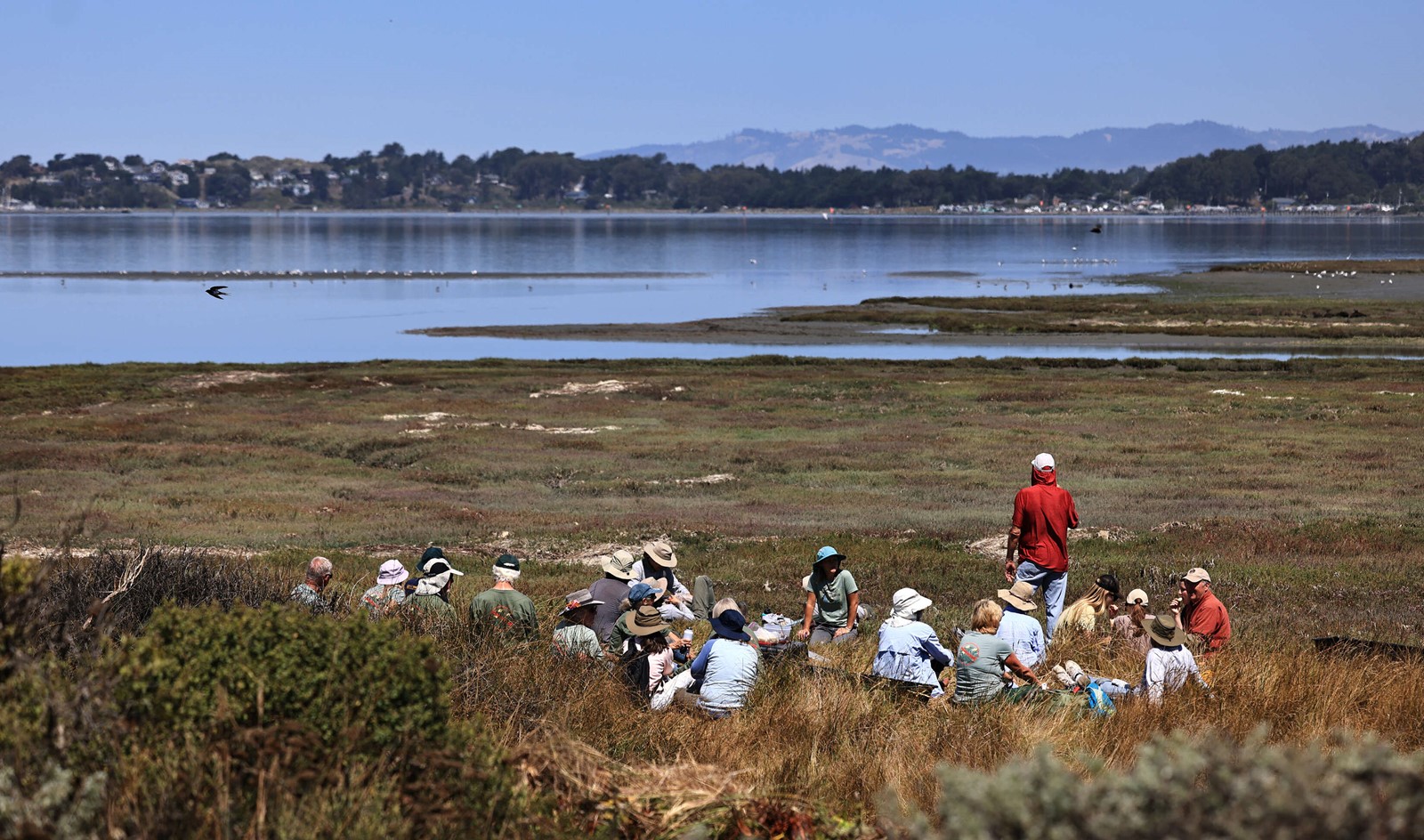
The group, the Milo Baker Chapter of the California Native Plant Society, meets several times a month in Bodega Bay to pull ice plant, European dune grass and other invasives from the salt marsh and dune habitats in and around Doran Regional Park. It’s difficult to quantify how many plants they have pulled out, but the work most definitely has made a difference.
“Native plants are thriving in the areas we’ve managed, which is a good sign,” said Volunteer Coordinator Alynn Kjeldsen. “Beyond that the work is addicting and therapeutic and fun.”
For the California Native Plant Society which was founded in 1965, ice plant currently is public enemy number one.
For the California Native Plant Society, which was founded in 1965, ice plant currently is public enemy number one.
The flora is native to South Africa, brought to California in the 1800s, and planted along the railroads to stabilize the soil around the newly constructed tracks. As the statewide highway systems grew in the 1950s, roadsides were also planted with ice plant.
According to Kjeldsen, ice plant is bad for the Sonoma Coastal ecosystem for several reasons. First, it grows quickly, forming a monoculture by (literally) suffocating all other plants around and beneath it. Second, ice plant reduces biodiversity — very few local bugs are interested in it, which means larger creatures that eat those bugs go elsewhere to find food.
Finally, it turns out that ice plant doesn’t even protect against erosion; its roots grow only 3 to 6 inches deep.
Volunteers have targeted managing ice plant and other species to protect native plants.
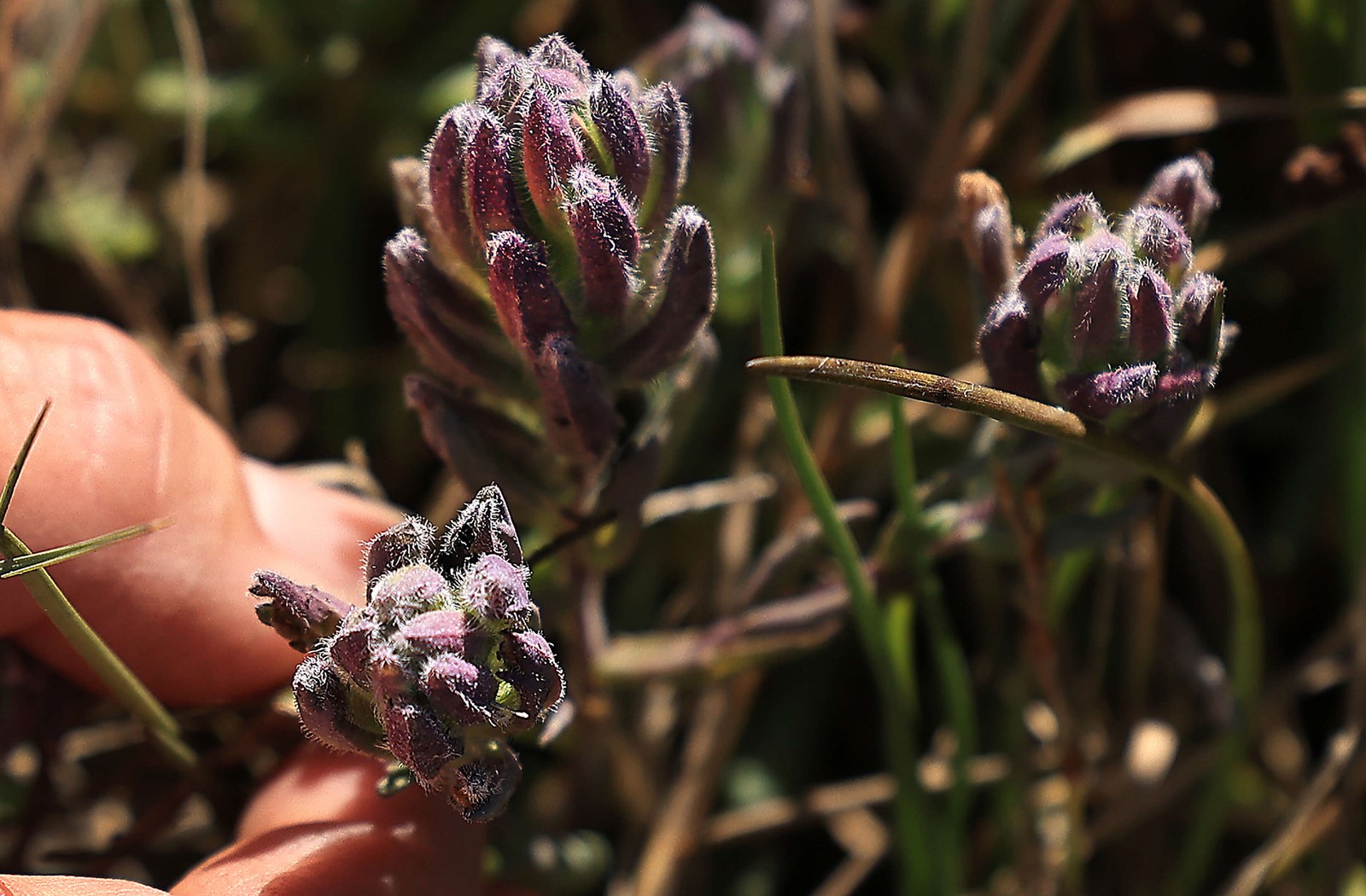
On the Sonoma County Coast, number one on this list is the Point Reyes Bird’s Beak, a grasslike plant with tiny pink and purple flowers that bloom all summer long. Other native species under protection include sand verbena, marsh rosemary, salt grass and common rush.
The invasive removal program began roughly 10 years ago, and it has continued largely through the support of volunteers. Today it is helmed by a woman named Jan Lochner.
Most recently, in the last five years at Doran Regional Park, volunteers have made significant progress. They have cleared ice plant from the 1.2-mile Bird Walk Coastal Access Trail, leaving mostly natives behind. They have removed many invasives along the bay side near the state-run campground. About 18 months ago, California Native Plant Society volunteers planted roughly 2,000 native plants near the boardwalk on the beach side.
Crews are now working areas near the entrance of the park.
Lots of Hard work
On a typical Wednesday, volunteer shifts at Doran begin around 9:30 a.m. The crew congregates in the second parking lot and receives their assignments for the day. Most volunteers grab plastic concrete mixing bins and loppers and head out to pull ice plant, European dune grass and other invasive species they spot. Other volunteers take hacksaws to trim back lupine, which is a native plant but sometimes can grow out of control.
On a recent shift, volunteers focused on the marsh side — the side facing Bodega Harbor. Over the course of 15 minutes, a crew
of about 12 individuals had pulled out 10-12 bins worth of ice plant.
The work was tedious and grueling; several volunteers were on their hands and knees pulling and lopping entire vines of ice plants.
One of those volunteers was Gary Hagen, a resident of Bodega Bay. Hagen, 68, said he got involved for the camaraderie and for the opportunity to make his local community a better place.
“It’s turned out to be something I really enjoy,” he said.
Another volunteer, Kimberly Beltran, was logging giveback hours for her employer, Sonoma Clean Power. Every month Beltran and co-workers get paid for eight hours to work in the community. The 51-year-old Santa Rosa resident said she also has volunteered at the Sonoma Land Trust and the Redwood Empire Food Bank.
For her, the work in Bodega Bay is personal: Her dad was a commercial fisherman and she spent a part of her childhood in Bodega Bay.
“This spot is a gem in the county — it always has been,” she said. “If we want to keep it this way for generations to come, we have to take care of it, and that includes keeping invasive species out.”
More volunteer opportunities
As Beltran spoke, she tossed strings of ice plant into a bin with other organic detritus. When the bin was full, she lugged it with a rope over to a giant pile where other volunteers had dumped their bins. After an hour, the pile was several feet wide and several feet tall — a small mountain of extirpated plants.
Kjeldsen noted that crews don’t leave the piles for onlookers to admire the work, but instead to let the pulled plants dry and eventually lighten in weight. She said that whatever doesn’t decompose naturally after about a year is hauled to Recology for compost.
In addition to the work in Doran Regional Park, the Milo Baker chapter of the California Native Plant Society organizes volunteers for other invasive species management projects on the Sonoma Coast, too.
On the second Sunday of every month, volunteers meet on Bodega Head to manage ice plants and other invasive species there. Another one of the species on the most wanted list for this area is the wild radish.
The crew also gathers one Wednesday each month at the Bodega Marine Laboratory to manage ice plant and other invasive species around there. Kjeldsen said that because the lab sits on bluffs that are a bit off the beaten path, there is quite a concentration of invasive plants that must be removed.
Positive impacts, camaraderie
The one certainty about invasive species: They just keep coming. Even after volunteer crews remove all the ice plant from one area, they must hit it again and again.
Kjeldsen noted this is why volunteers don’t use the word “eradicate” to describe their goals.
In this sense, the work evokes the Greek myth of Sisyphus, a fictional character who was punished in the underworld by being forced to eternally roll a boulder up a hill, only for it to roll back down each time he neared the top.
Still, the effort has yielded positive returns. Though there has been no formal study, volunteer accounts indicate that native plants are on the rebound in the area.
Kjeldsen and other volunteers also said they have seen growing numbers of the Western Snowy Plover, a threatened bird species that had nested in the dunes before they became overrun with ice plant. Recent surveys by Sonoma County Regional Parks indicated the number of plovers in the area has more than doubled to 92 this year from 41 last year.
Another byproduct: camaraderie. As they have gotten to know each other over the years, many volunteers also have become friendly with each other, meeting up for post-work lunches, Happy Hours, dancing and occasional kayak excursions.
“They’ve developed a really nice community among themselves,” said Kjeldsen. “When you think about this way, we’re improving the local ecosystem in more ways than one.”
